
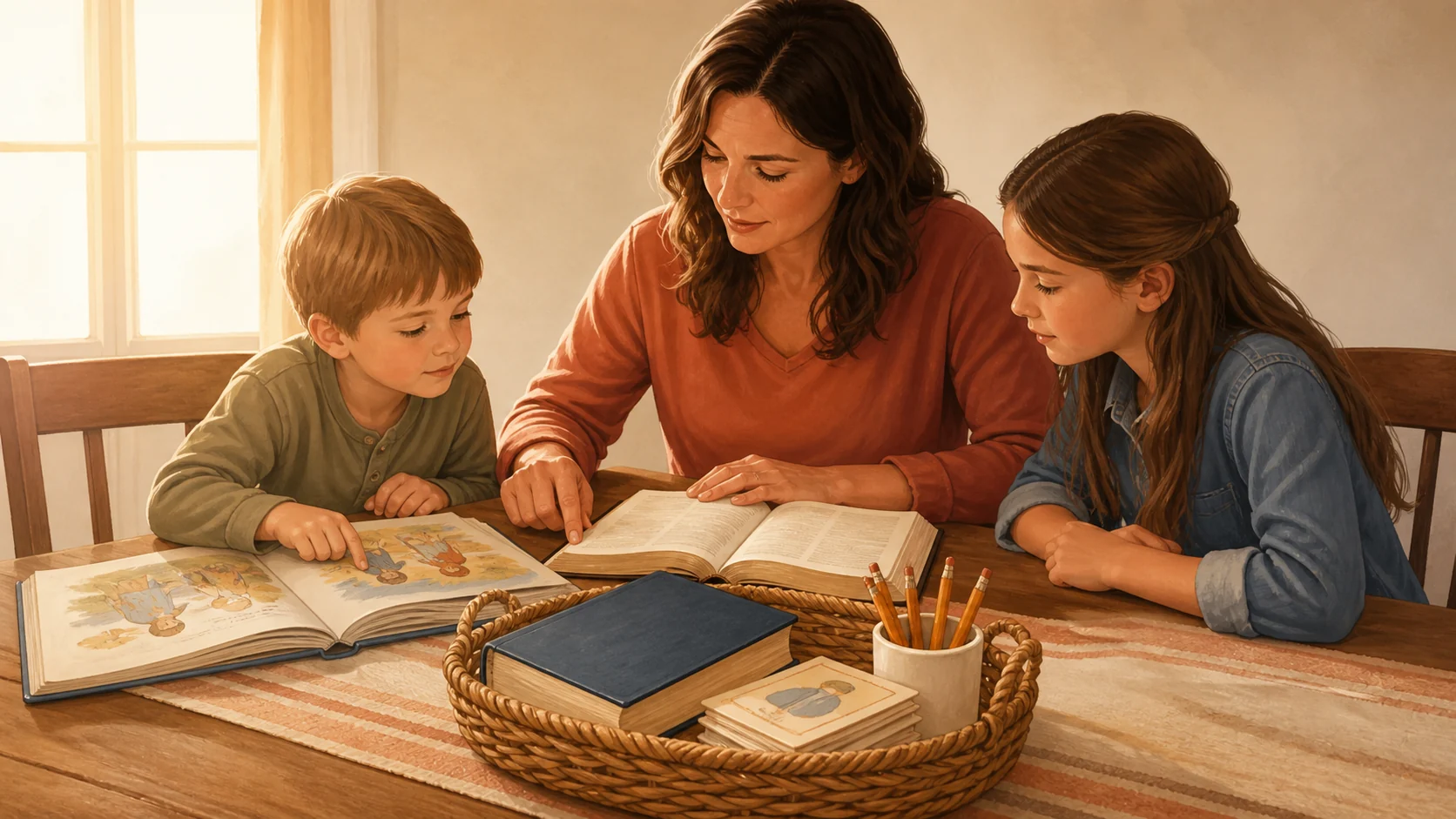
The phrase morning basket can sound like one more beautiful homeschool idea that requires a perfect table, matching supplies, and children who wake up eager to discuss poetry. That is not what I mean. A morning basket is simply a place to gather the things you want your family to return to together.
It can hold a Bible, a read aloud, a prayer prompt, memory work, and one or two resources that are easier to enjoy as a group. The basket itself is not the goal, but it can make the goal easier. For a Christian homeschool family, that goal may be very simple: begin the day together, bring God into the ordinary rhythm of learning, and create a little connection before everybody moves in different directions.
Start With What You Want the Morning to Feel Like
Before choosing books or printing another checklist, ask one question: What does our family need at the beginning of the day? Maybe you need calm. Maybe your children need a softer transition into lessons. Maybe family Bible time keeps getting pushed aside because individual subjects take over.
Maybe you need ten minutes when everyone is in the same place before the toddler wanders off and the older child begins independent work. Let that answer shape the basket. A routine designed around your family's real need is more likely to last than one copied from somebody else's homeschool.
What to Put in a Christian Homeschool Morning Basket
You do not need everything on this list. Choose a few pieces and leave room for the routine to breathe.
A Bible your family can read together
Read a short passage rather than trying to complete a long section. One Psalm, a few verses from a Gospel, or the Scripture connected to your current family devotional is enough. For younger children, retell the passage in plain language and ask one concrete question: What does this show us about God?
A simple prayer prompt
Keep a small card with three prompts:
- Thank God for something.
- Ask God for help with something.
- Pray for someone else.
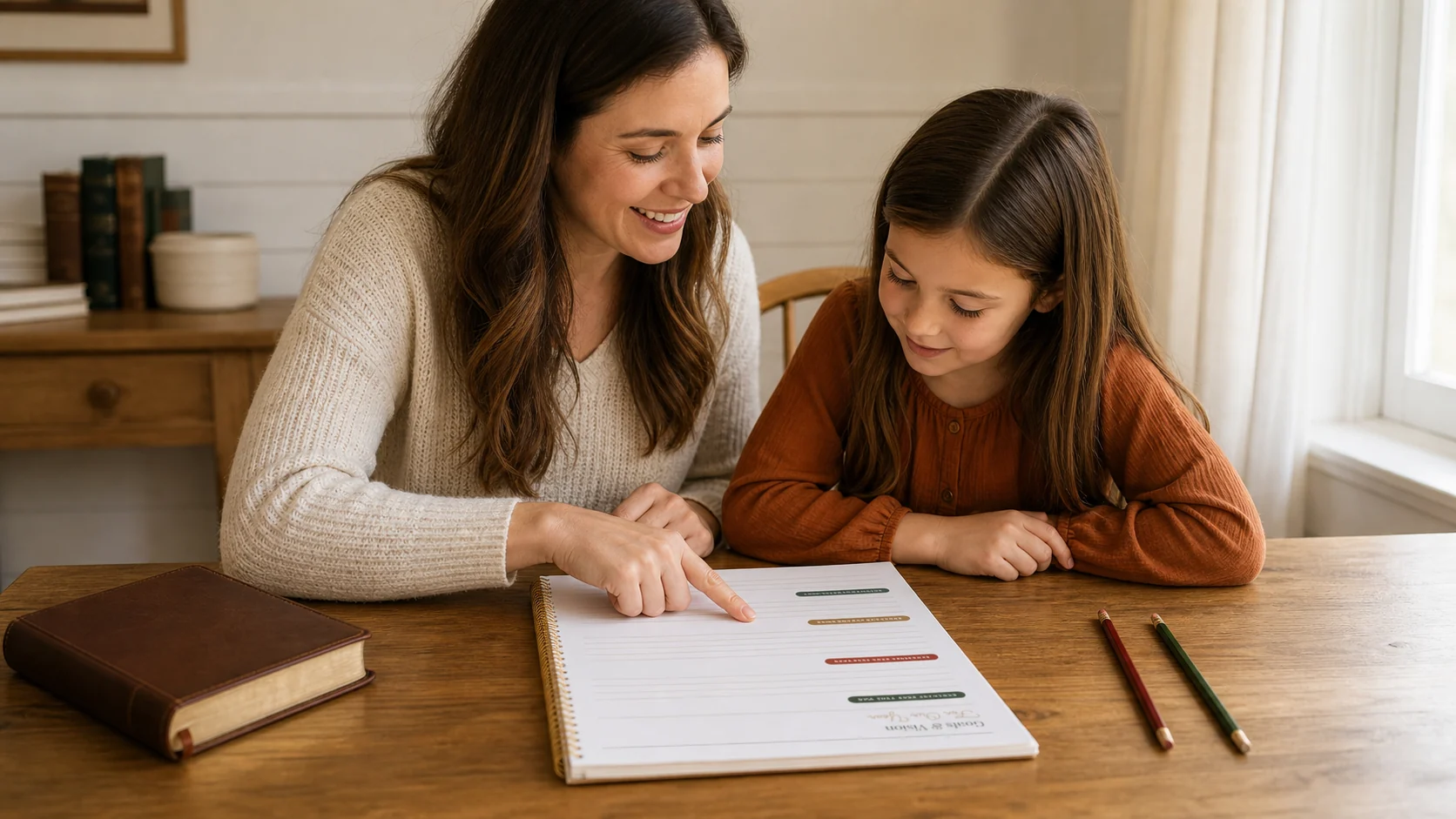
Children do not need impressive prayers to participate; they need regular opportunities to discover that prayer belongs in ordinary family life.
A read-aloud
Choose something everyone can listen to, even if each child understands it at a different level. Read one chapter or stop after ten minutes. Ending while they still want more is not a failure.
Memory work
This might be one Bible verse, a short poem, a hymn, multiplication facts, or a sentence from something your family is learning. Repeat it together for a week instead of adding something new every day.
One rotating resource
This is where you can add variety without making every morning long. Rotate nature study, art appreciation, geography, character development, or a family discussion card.
Keep the Core Small
The easiest way to abandon a morning basket is to put twelve good things inside it and believe you need to use all twelve every day. Choose a core:
- Scripture
- Prayer
- Read-aloud
Then add one rotating subject if the morning has room. That is enough for a meaningful rhythm. You can always do more later, but a routine that survives ordinary days is more valuable than one that only works when everyone is rested and cooperative.
Let Children Participate Without Running the Whole Routine
Children are more invested when they have a real role. One child can choose the prayer card. Another can find the Bible passage. An older child can read aloud. A younger child can place a marker beside the item you finished. Participation gives them ownership, but you do not need to turn every choice over to them. A dependable structure often helps children know what to expect.
What to Do When the Morning Falls Apart
Some mornings, the baby cries through the reading, another child complains, and breakfast takes longer than expected. You may begin late and only finish two verses before it is time to move on, but the basket still served your family by bringing the important things into view.
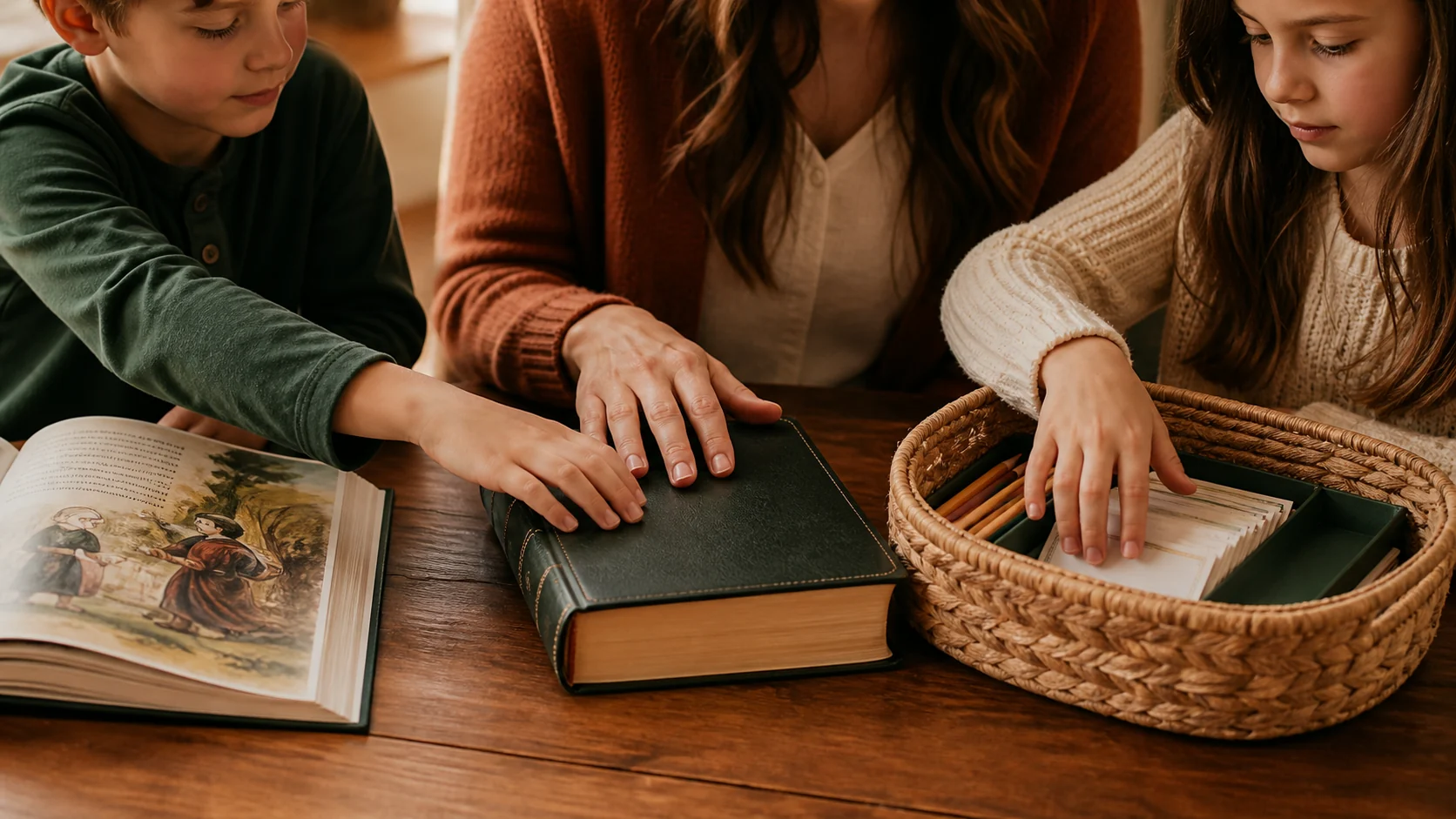
It gave you a place to begin and reminded everyone that time with God and time together do not have to happen perfectly to matter. Try using three versions of the routine:
Full morning: Scripture, prayer, read-aloud, and rotating subject.
Short morning: Scripture and prayer.
Very hard morning: One verse and one sentence prayed together.
A flexible routine does not lower the value of what you are doing, but helps the habit remain available to your real family.
Plan the Rhythm, Not Every Minute
This is where a homeschool planner can help. Instead of scheduling the basket down to the minute, give it a dependable place in the day. Write the week's Scripture, read-aloud pages, and rotating subject in one visible section.
You should be able to glance at the plan without needing to recreate the morning in your head. The Our Faith Filled Family Homeschool Planner was designed for real homeschool life, including the weeks that change halfway through. Use the pages that support your family and leave the sections you do not need.
A Simple Next Step for Your Family
If your family needs a place to hold the plan, or a gentle way to bring faith into the week you already have, these resources can help you begin without overcomplicating the morning.
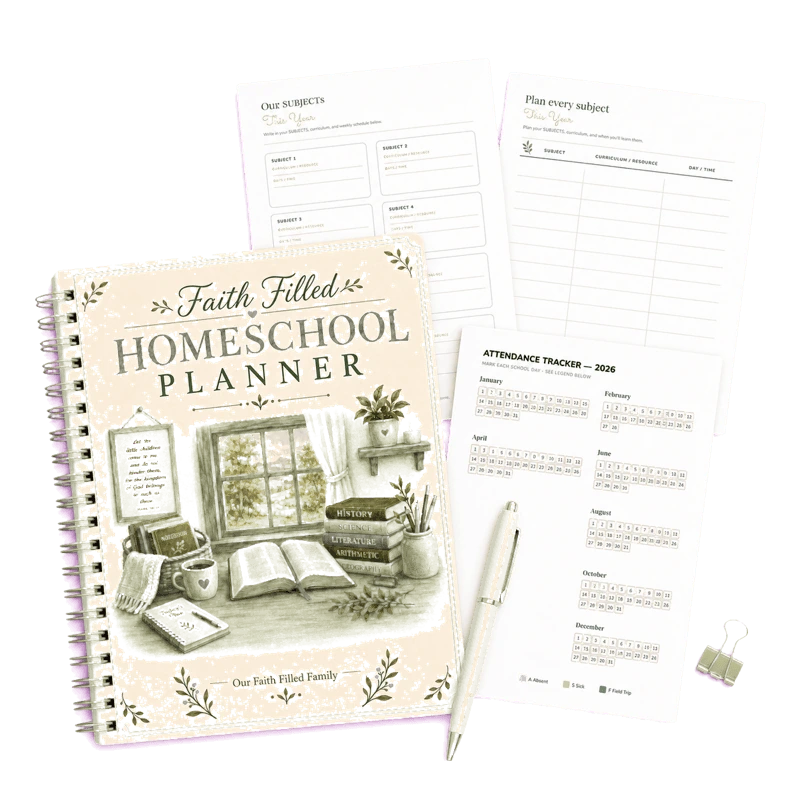
Faith-Filled Homeschool Planner
Give Scripture, read-alouds, subjects, and changing family rhythms one flexible place to live. These are real pages from the planner.
See the Homeschool Planner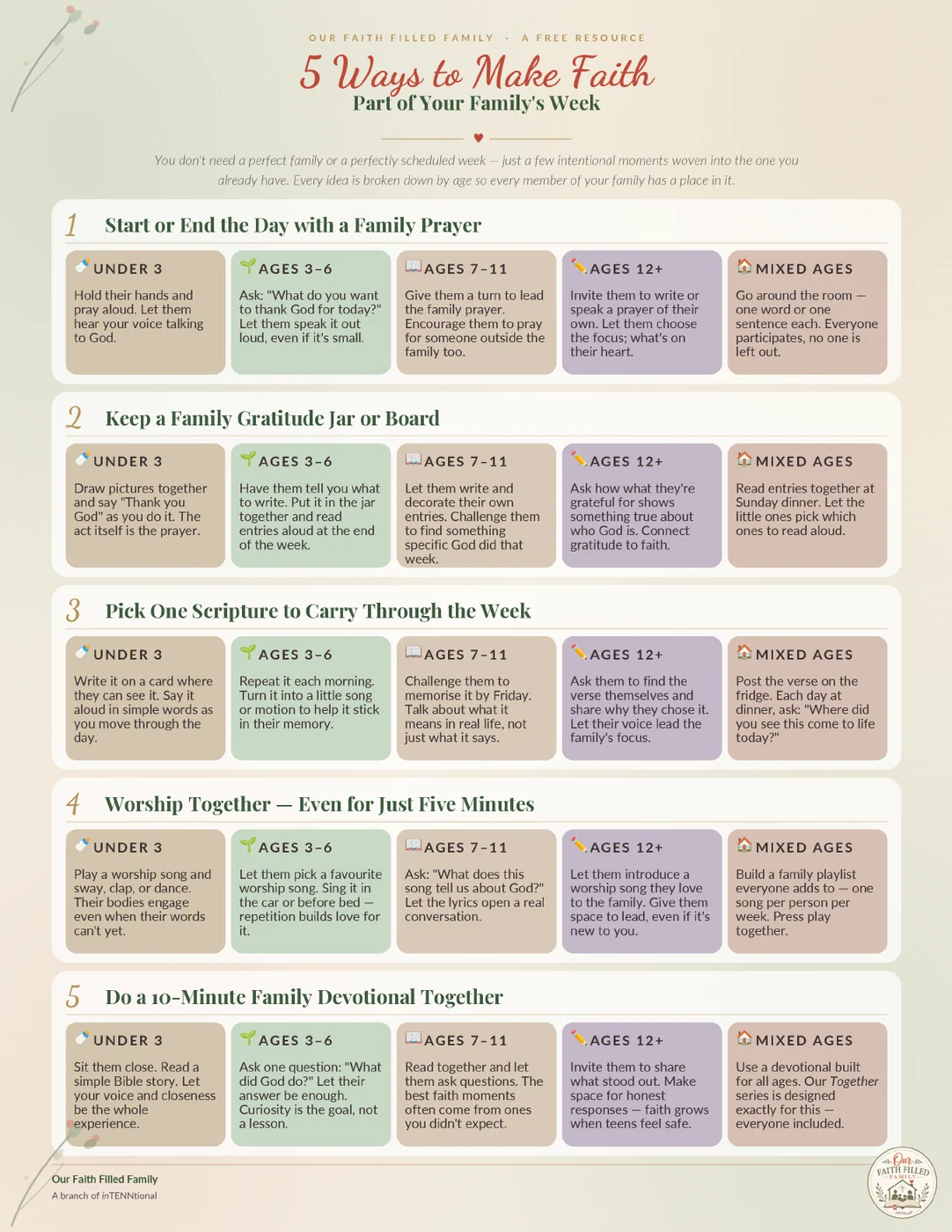
5 Ways to Make Faith Part of Your Family's Week
Start with one simple, age-appropriate idea for prayer, Scripture, worship, or family devotion during the week you already have.
Get the Free Family Resource