

There is a kind of prayer nobody really teaches you how to pray. It is not the prayer that follows good news or the one that comes easily when you can already see God making a way. Rather, it is the prayer you return to after asking for the same thing again and again, when nothing seems to have changed.
Maybe it is a relationship that is still strained, a diagnosis that did not improve, a child you are still worried about, or a door that has stayed closed for so long that you have stopped checking it.
You may have prayed about it with hope, with tears, with Scripture, and with other people. Now, when you try to bring it to God again, you honestly do not know what is left to say. I think this is where many of us quietly begin pulling away from prayer.
We do not pull away because we have stopped believing in God or because we no longer care. We are simply tired of repeating ourselves, and somewhere along the way, we started believing that a faithful prayer should sound more hopeful than we actually feel. Psalm 13 gives us another way.
Listen to the podcast episode
When Prayer Changes Nothing, How Do I Keep Talking to God?
Prefer to listen? Press play above. Prefer to read? Keep scrolling.
God Can Handle the Part You Keep Editing Out
David begins Psalm 13 with words many of us would hesitate to say out loud:
“How long, Lord? Will You forget me forever?”, Psalm 13:1
David's opening is neither polished nor careful, and it does not begin with a tidy statement about God's goodness before getting to the difficult part. He tells God how the situation feels.
This matters because we sometimes confuse honesty with disrespect, softening the sentence before we say it and removing the anger, disappointment, or confusion because we think God needs a more spiritual version of what is happening inside us. Yet God already knows the unedited version. Prayer is not where we give God information He does not have; it is where we stop carrying that information alone.
Biblical lament is not walking away from God, but turning toward Him with the pain we might otherwise use as a reason to withdraw. David's question sounds raw because the relationship is still open. He is still speaking to God, even when he does not understand what God is doing.
An Honest Prayer Does Not Need to End Where It Started
Psalm 13 moves through four simple places:
- David turns toward God.
- He names what hurts.
- He asks clearly for what he needs.
- He remembers what remains true about God.
The movement matters, but it is not a formula for forcing yourself into a better mood. David does not pretend the situation is resolved. The Psalm never tells us that his circumstances changed before he reached the final lines. What changed inside the prayer was that disappointment was no longer the only truth in the room.

This is one of the most important distinctions we can learn: remembering God's character does not require denying our disappointment. We can say, “God, this has not changed, and it hurts,” while also saying, “I still believe Your love has not left me.” Both sentences can be true at the same time, because sturdy faith is able to tell the truth without letting pain have the final word.
Stop Trying to Produce the Correct Feeling
Sometimes the hardest part of an unanswered prayer is the pressure we add to it. We think we should feel peaceful by now. We should have learned the lesson. We should be able to pray without crying. We should be more grateful, more surrendered, or less affected by the fact that the answer has not come.
So now we are carrying the original pain and a second burden: the fear that we are handling it badly. What if you stopped grading the prayer? What if the goal today was not to sound certain, but to stay connected?
You do not have to manufacture confidence before speaking to God or promise that you are fine with whatever happens when you are not there yet. You can bring Him the faith you actually have, even if today it looks like one honest sentence: “God, I do not understand why this has not changed.”
You may only be able to say, “I want to trust You, but I am tired,” or “I do not know what to ask for anymore, so please help me stay close.” Each of those sentences is a real prayer because each one keeps the conversation with God open.
A Simple Way to Bring the Same Prayer Back to God
If you have been avoiding one particular prayer because you no longer know what to say, try bringing it to God in four honest parts.
1. Name what has not changed
Use one plain sentence. Do not minimize it, but do not make yourself explain the entire history either.
God, this relationship is still broken.
God, we still do not have the answer we need.
God, I am still waiting.
2. Tell Him what this is doing inside you
Are you angry, tired, or afraid to hope again? Say that honestly, because God is not asking for the version of you who has already worked through it. He is meeting you here.
3. Ask for what you need now
Your request may have changed. Perhaps you are still asking for the larger answer, but today you also need strength for a conversation, wisdom for one decision, help getting through the next hour, or courage to ask someone for support. Give yourself permission to ask for that need clearly.
4. Place one true thing beside what is unresolved
You do not need ten answers or a speech. Choose one truth you can genuinely hold today: You have not left me. You are still good, even though I do not understand this. You are listening, even when I cannot see what You are doing. That truth does not erase the pain, but it keeps the pain from becoming the only voice speaking.
What If Nothing Feels Different After You Pray?
You have still prayed, even if nothing feels different afterward. I know that can sound almost too simple, but we have attached so many measurements to prayer. We look for immediate peace, a sudden answer, a change in our emotions, or some clear confirmation that the moment “worked.”
Sometimes prayer does bring a noticeable shift. At other times, we stand up and the situation is still difficult, our eyes are still swollen, and we still do not know what happens next. The prayer still mattered because its value was never limited to whether it changed the circumstance; the relationship remained open.
You brought the disappointment to God instead of letting it become a wall between you. You allowed Him into the place where silence had started to grow. That matters, even when it does not feel dramatic.
A Prayer for the Person Who Is Tired of Asking
God, You already know what has not changed. You know how many times I have asked, how hopeful I felt at the beginning, and how difficult it has become to bring this back to You. I do not want disappointment to close the conversation between us. Help me tell You the truth without believing that my honesty pushes You away. Give me what I need for today, and remind me of what remains true about You while the answer is still unfinished. In Jesus' Name I pray, Amen.
Want the Full Conversation?
In the full episode, we spend more time in Psalm 13, talk about what biblical lament is, and what it is not, and walk through a realistic way to bring one unanswered prayer back to God without minimizing the hurt or forcing certainty.
Listen to the podcast episode
When Prayer Changes Nothing, How Do I Keep Talking to God?
Keep Sitting With This
The free Built for Real Life companion guide gives you a place to work through Psalm 13 and apply this pattern to one real prayer. It is not another workbook you need to complete perfectly. Use the page that meets you where you are and leave the rest for another day.
Download the free Built for Real Life companion guide If this season needs more than a general resource, a personalized devotional can give you Scripture and reflection shaped around the situation you are actually carrying. Explore personalized devotionals
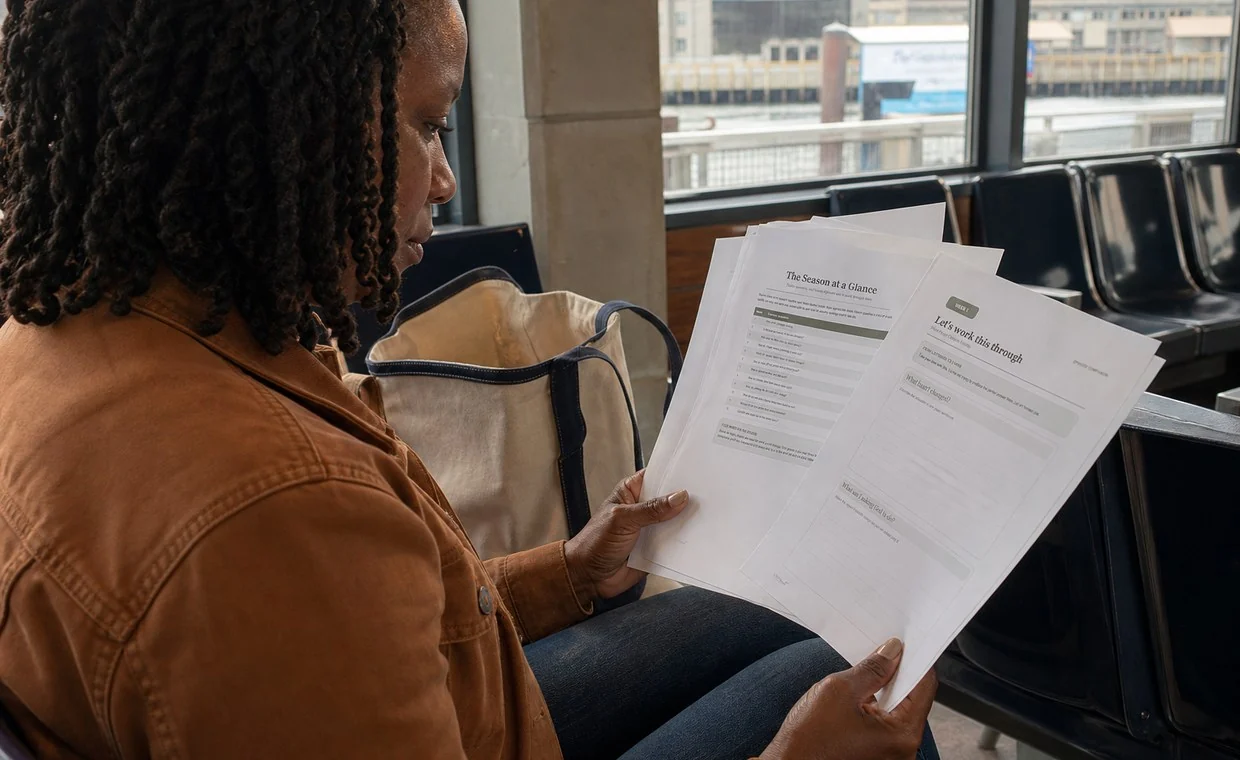
Built for Real Life Companion Guide
Work through the episode with a practical, Scripture-rooted tool created for this season of the inTENNtional with God podcast.
Get the Free Companion Guide
Personalized Devotionals
Receive Scripture and reflection shaped around the season, question, or struggle you are actually walking through.
Explore Personalized Devotionals