
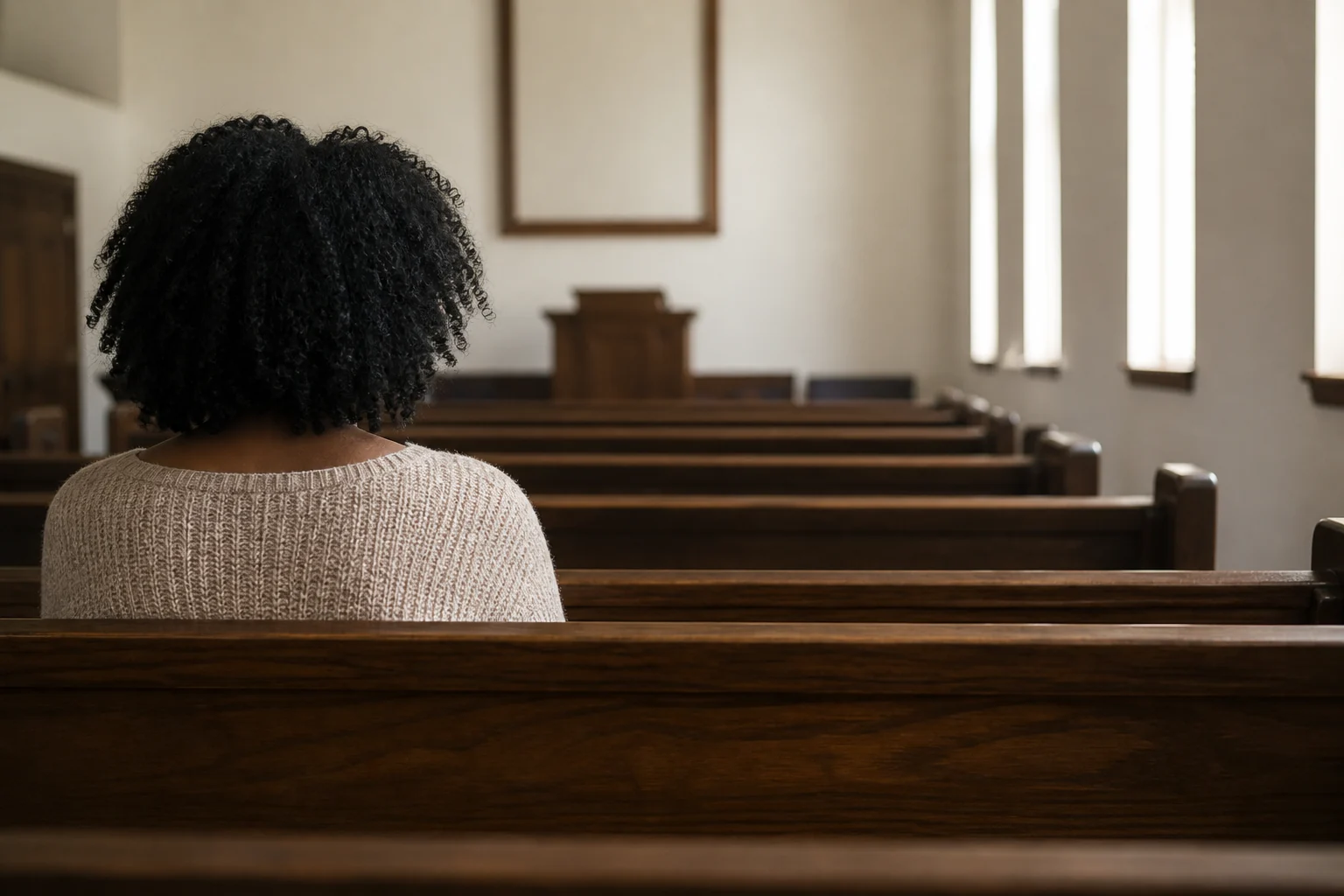
Church hurt carries a particular kind of confusion. The place that spoke about safety, truth, and God may be the same place where harm was ignored, excused, or caused. You may be grieving people, community, certainty, and the way you once understood God, all at the same time.
Listen to the podcast episode
What Do I Do When the Church Is the Place That Hurt Me?
Prefer to listen? Press play above. Prefer to read? Keep scrolling.
Scripture Doesn't Protect Harmful Shepherds
Ezekiel 34 confronts leaders who fed themselves instead of caring for the flock. God names the neglected, injured, scattered sheep, and says He will seek them, bind them up, and strengthen them. Your experience with harmful spiritual authority isn't proof that God agrees with the person who misused His name. Scripture repeatedly brings abusive power into the light.
That truth matters because church hurt can confuse the voice of a leader with the voice of God. When Scripture was used to control you, opening the Bible may feel complicated. When community was the place of harm, being told to find another community may sound far too simple. Healing often begins by allowing those reactions to be named without shame. God isn't threatened by your need for safety, time, and careful discernment.
Conflict and Spiritual Abuse Aren't Identical
Church conflict can include disagreement, poor communication, disappointment, or an offence that can be addressed through mutual truth and repair. Spiritual abuse involves patterns such as coercive control, misuse of Scripture or authority, intimidation, forced secrecy, retaliation, exploitation, or punishment for asking legitimate questions. Naming the difference matters because the safest next step may be different.
Look at the pattern, the power involved, and what happened when concerns were raised. Healthy leaders may make mistakes, but they can listen, accept correction, seek repair, and allow accountability outside themselves. Harmful systems often protect reputation first, isolate the person asking questions, and demand quick forgiveness without meaningful change. You don't need to minimize a pattern simply because individual moments can be explained away.
Truth-Telling Can Carry a Cost
Rachael Denhollander's public account illustrates that telling the truth about institutional harm can be costly, even when it protects others. A painful reaction from an institution doesn't automatically mean the person speaking is divisive or unforgiving. Forgiveness doesn't require immediate return, restored access, silence, or trusting leaders who haven't demonstrated accountability.
Truth telling also deserves wise support. Keep records when facts may later matter. Speak with people who aren't controlled by the institution involved. If a crime, child safety concern, professional misconduct, or immediate danger may be present, seek advice from the appropriate civil authority or qualified safeguarding professional. A church should never be the only body deciding whether its own conduct requires investigation.
Choose One Safe Next Step
You don't have to decide today whether you'll ever enter another church. Start with the next decision:
- What happened, stated plainly?
- What impact is it having now?
- What support is safely outside the institution involved?
- Is reporting to civil authorities, a regulator, or safeguarding body needed?
- What would accountability, not image management, look like?
Situations involving abuse, a crime, trauma, threats, child safety, or danger require qualified local support and may require reporting outside the institution.

A Prayer After Church Hurt
God, separate Your character from the harm done in Your name. Meet me where trust has been broken. Lead me toward safe people, truthful support, and the next step that protects what is vulnerable. Heal what has been injured without rushing me to pretend. In Jesus' Name I pray, Amen.
Listen to the Full Episode
The episode explores Ezekiel 34, the difference between conflict and spiritual abuse, the cost of truth-telling, forgiveness, access, and safety.
Listen to the podcast episode
What Do I Do When the Church Is the Place That Hurt Me?
Take One Step Without Deciding Everything
Week 10 of the free Built for Real Life companion guide begins on page 33. Download the free companion guide If you want Scripture support shaped gently around your own experience, explore personalized devotionals.

Built for Real Life Companion Guide
Work through the episode with a practical, Scripture-rooted tool created for this season of the inTENNtional with God podcast.
Get the Free Companion Guide
Personalized Devotionals
Receive Scripture and reflection shaped around the season, question, or struggle you're actually walking through.
Explore Personalized Devotionals