
The Power of Quietness | Why stillness feels uncomfortable — and why it matters more than we think
- Tenn-Lai Frame
- Mar 25
- 4 min read

Updated: Apr 18
Prefer to listen? Press play above! Prefer to read? Keep scrolling!
There was a time when silence was just a part of life. This wasn’t about creating a peaceful atmosphere with candles and music; it was simply the natural pauses in our day when nothing vied for our attention. These were the moments when our minds could rest, free from constant stimulation and distractions pulling us in every direction.
At some point, those moments of quiet faded away.
These days, silence can feel uncomfortable, even a bit scary. We often turn to noise without thinking—like music, podcasts, or just scrolling through our phones—not necessarily because we want it, but because being quiet brings up feelings or thoughts we usually try to avoid.
However, the Bible doesn’t see quietness as something we can skip. In Psalm 46:10, it doesn’t suggest that we find stillness only when things are going well. Instead, it encourages us to be still when life feels chaotic. This stillness isn’t meant to be a way to escape; it’s a way to respond to what’s happening around us.
When Quiet Feels Like Losing Control
For many of us, being still isn’t hard because we don’t know how to be quiet; it’s tough because quietness makes us feel like we’ve lost control. When we move around, it feels like we’re making progress. Noise can make us feel safe, and being busy tricks us into thinking we’re managing everything just fine.
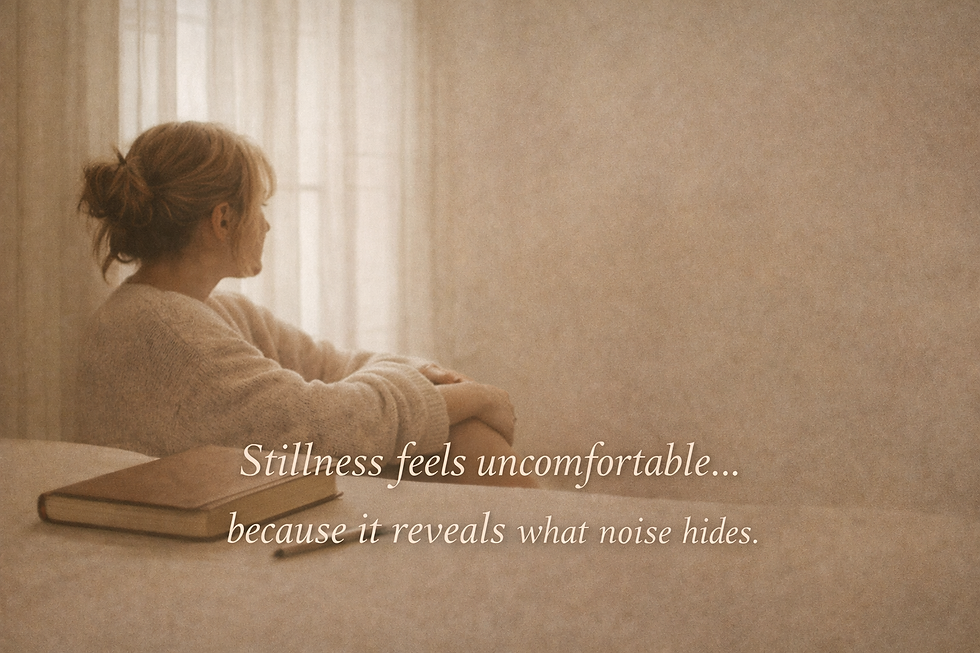
But when it’s quiet, all of that disappears.
In moments of stillness, we can’t control what happens by simply being active. We can’t silence our worries by keeping busy. Instead, we are confronted with the reality that a lot of life is beyond our control.
This is exactly why finding stillness is important.
It’s not that God needs silence to communicate with us; it’s that we need silence so we can stop interrupting and truly listen.
🎧 Listen to Episode 19: The Power of Quietness
Quietness Doesn’t Deplete You — It Uncovers You
Many people shy away from quiet because it tends to bring hidden feelings and thoughts to the forefront. It can stir up thoughts you’ve been pushing aside, questions you’ve been avoiding, and tensions you’ve learned to live with.
Noisy environments help keep everything under control, while silence encourages honesty.
However, the Bible doesn’t suggest that this is something to fear. Time and again, God connects with people not through grand displays but through moments of awareness. Quiet moments create a space where truth can finally come to light.
This isn’t about judgment or pressure; it’s about gaining clarity.
Being still doesn’t create disorder — it simply reveals what was already there.
Why We Mistake Quietness for Weakness
We live in a fast-paced world that values being quick and busy. People are expected to respond immediately, stay constantly engaged, and produce visible results. In this environment, being quiet can often be seen as a sign of disengagement or even weakness. However, the kind of stillness described in the Bible is not about withdrawing from life; it’s about exercising self-control.
It takes strength to pause before reacting, discipline to refrain from always pushing forward, and courage to let God take charge.
Quietness isn’t a sign of giving up; rather, it comes from having enough trust to stop trying to prove ourselves.
Embracing Stillness as a Way of Life
Being quiet isn’t just something you do once a day; it’s a way of being that you carry with you. It appears when you take a moment to think before you respond. It’s about resisting the temptation to fill every second with activity. It’s when you stop trying to force everything to make sense and allow space for God to work without your input.
Finding stillness doesn’t require huge changes in your life. Instead, it asks for smaller, courageous choices—those moments when you decide to be present rather than in control.
It’s about letting go of the need to manage every outcome.
A Different Way to Listen
Many people come to God with a list of things they want to say or ask for. They have requests, explanations, and plans all lined up.
However, when you take a moment to be quiet, it changes the way you connect. Instead of just talking, you start listening and being open to what’s around you.
This doesn’t mean that God suddenly starts speaking out loud; rather, your heart becomes more open and ready to receive.

In these quiet moments, faith shifts from being about how hard you try to being more about being aware of what’s happening within you.
It’s less about what you’re doing and more about being in harmony with what’s around you. This is where your relationship with God can grow deeper—not through intensity, but through genuine attentiveness.
A Gentle Invitation
This week, try not to plan for quiet moments. Instead, just let them happen.
Take a seat and be present without needing to fill the silence. Go for a walk without making any noise. Spend some time in prayer without saying anything. The goal isn’t to achieve something; it’s simply to recognize a deeper presence.
Embracing quiet doesn’t mean you have to do it perfectly. It just takes a willingness to be still.
Being still doesn’t mean you have to create the perfect environment. It’s really about letting go of the urge to control what happens next.
You don’t need to block out the noise of the world to find stillness. You also don’t have to run away from your life to connect with God. All you need to do is pause long enough to remember who He is.
If you’re looking for something to help you slow down this week, the From Fear to Faith devotional can be a comforting guide during chaotic times.
Until next time, walk intentionally with God.



Comments