

Listen to the podcast episode
Learning God’s Character Through His Word: More Than a Rulebook
Prefer to listen? Press play above! Prefer to read? Keep scrolling!
For many of us, the Bible has slowly become something functional. We turn to it when we're in trouble, when we feel guilty, when we need direction fast, or when life throws us into a moment of desperation for clarity or reassurance.
And none of that is wrong. But when Scripture becomes only a tool—something we grab in moments of urgency—we begin to miss its deeper purpose. We start using the Word like a GPS rather than receiving it as a conversation. We search for answers, directions, and quick fixes, but we don't always come simply to know God.
Psalm 119:105 gently reframes this for us:
"Your word is a lamp for my feet, a light on my path."
The Difference Between a Lamp and a Spotlight: Understanding God's Word
We live in a world filled with bright lights and quick visibility. When we think of the word 'light', we picture something that reveals everything at once. We crave clear answers that can predict the next five years. We want to know the results before we even start.
But the Bible talks about God's Word differently. It refers to it as a lamp.
Back in biblical times, lamps were small, and you held them in your hand. They only lit up a few steps ahead—just enough to help you walk safely. They didn't show you the entire path or tell you where you were headed. You had to stay close to the person holding the lamp.
This is on purpose. If God showed you the whole plan all at once, you wouldn't need to walk with Him—you'd just follow the instructions. But the Bible is meant to reveal who God is, little by little, so that your trust can grow as you obey.

God doesn't just want you to know the way. He wants you to know Him in the way.
🎧 Listen to the Full Episode Here
Listen to the podcast episode
Learning God’s Character Through His Word: More Than a Rulebook
How the Bible Reveals God's Character (Not Just His Instructions)
When Scripture is described as light, it's not just about direction—it's about relationship.
The Bible isn't primarily a rulebook. It's not just a moral checklist or a collection of stories meant to inspire better behaviour. It reveals God's character.
Every page shows you something about who He is:
His faithfulness when people fail
His mercy when justice would be deserved
His patience when growth is painfully slow
His nearness when people are lost and afraid
When we approach Scripture only asking, "What do I need to do today?" we miss the more powerful invitation: "Who is God showing Himself to be right here?"
Why Knowing God's Character Changes Everything
Knowing God's character changes how you trust Him.
If you know He is faithful, you can walk forward even when the future is unclear. If you know He is merciful, you stop hiding. If you know He is loving, you draw near without fear.
This is why Scripture forms us—it doesn't just inform us.
Information tells you about God. Revelation allows you to know Him.
When the Checklist Kills the Connection: Breaking Free from Performance-Based Bible Reading
Many people struggle with Scripture not because they don't love God, but because they've turned intimacy into a performance.

We feel pressure to read enough, to be consistent enough, to understand enough. So when we miss a day or read and feel nothing, we quietly pull back. We assume we failed. We assume God is disappointed. We treat the Word like a class we didn't study for.
But Scripture was never meant to be approached with pressure. It was meant to be approached with hunger.
There are seasons where generic reading plans simply don't meet the weight of real life—seasons of grief, exhaustion, health concerns, or emotional overload. That doesn't mean your faith is broken. It means you're trying to use a spotlight method in a lamp season.
When the checklist dies, connection has room to breathe.
Reading Scripture to Listen, Not to Finish
Psalm 119 speaks again and again about delight in the Word.
You don't delight in instruction manuals. You delight in conversations. You delight in love letters.
What if, instead of reading Scripture to finish something, you read it to listen? What if you slowed down and asked, "What does this show me about who God is?"
Because there will be seasons where you don't know what's next, where life feels foggy, and answers don't come. In those moments, Scripture may not give you the why—but it will always give you the Who.
A lamp for your feet. Not the whole map. Just enough light to stay close.
And closeness is the goal.
A Way Forward: How to Read the Bible Relationally
The goal of Scripture is not consumption—it's connection.
So today, instead of asking what you should do with the Word, try asking what God might be revealing about His heart.
Later, take a moment and write this prayer:
"God, as I read Your Word, help me see who You are."
Then sit with one verse. Not to master it—but to meet Him there.
Want Help Letting This Settle?
If you're longing for Scripture to feel relational again—not heavy or pressured—I want to invite you into a quiet next step.
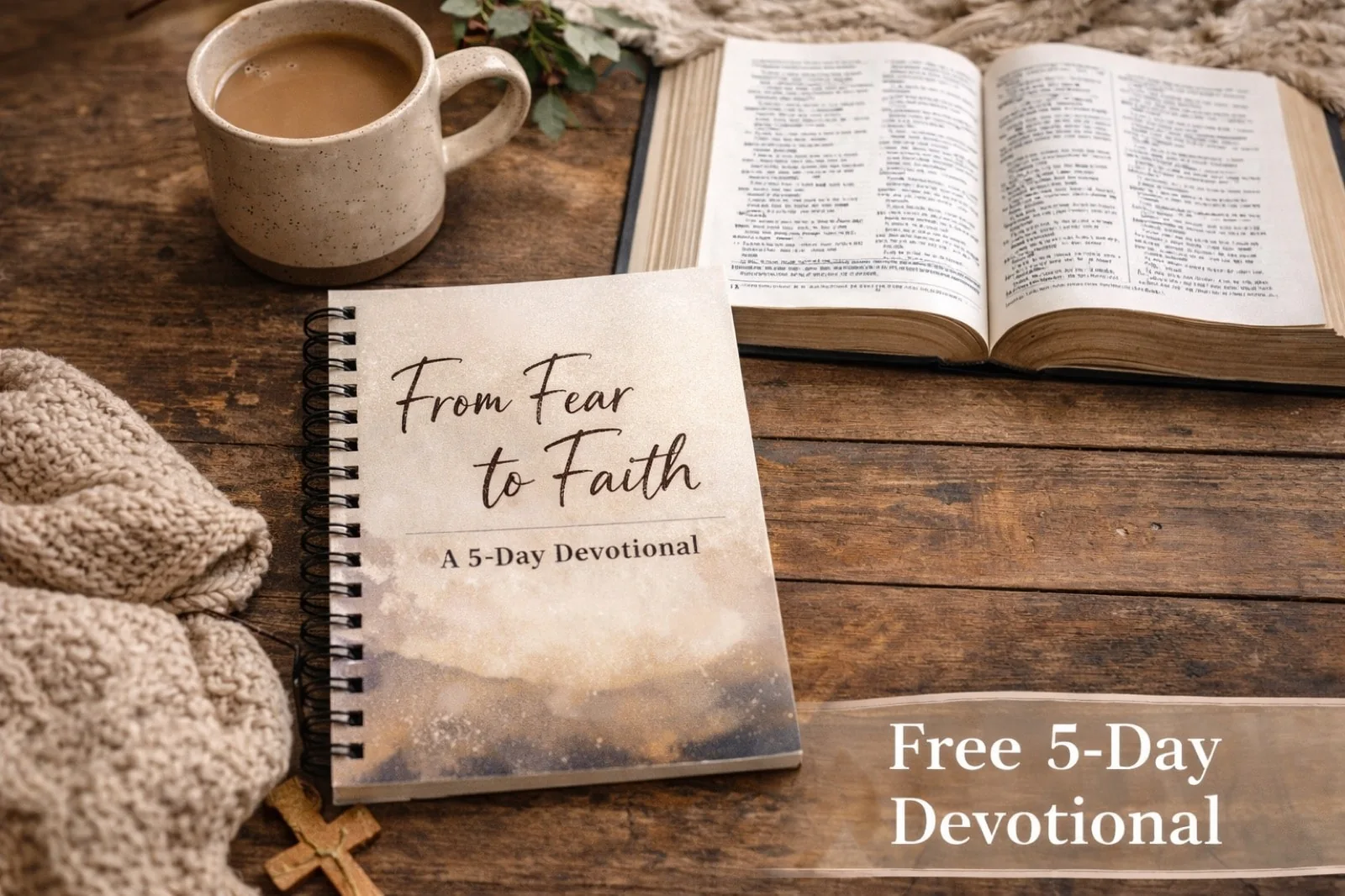
This devotional was created to help you slow down, let go of performance, and reconnect with God through His Word—without a checklist. It's gentle, Scripture-rooted, and designed for real life.
God's Word may not show you the whole path. But it will always give you enough light for the next step. And the One who holds the lamp walks right beside you.